Serving Kerrville, TX and surrounding areas. (830) 488-9157
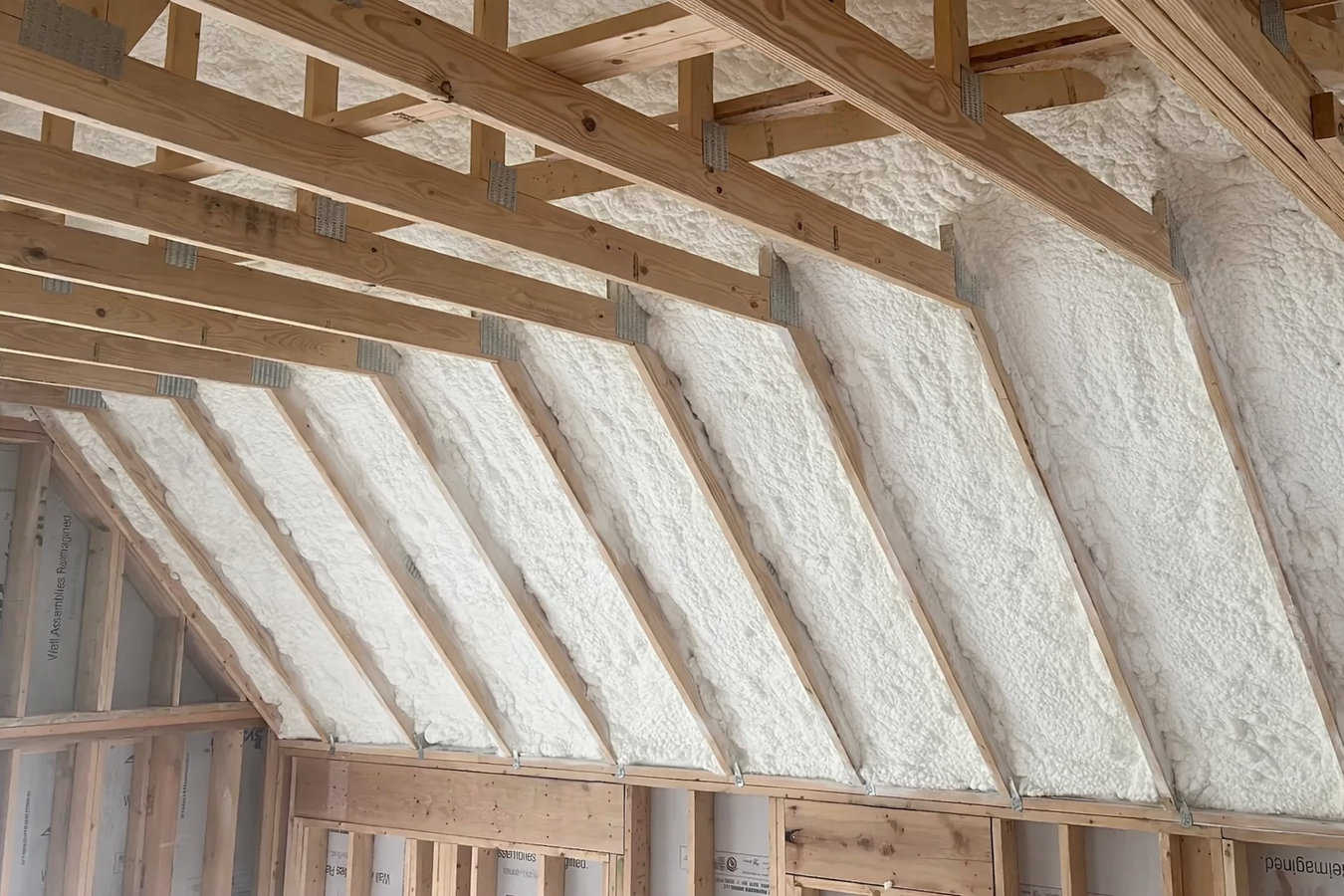
Closed-cell foam seals air leaks and insulates in the same application - no separate air sealing step needed. It holds its shape for the life of the building and resists moisture, making it the strongest option for Hill Country homes.
Closed-cell spray foam insulation in Kerrville is a two-part liquid a trained contractor sprays directly onto your walls, attic deck, or crawl space surfaces, where it expands and hardens within seconds into a dense, rigid layer that blocks both heat transfer and air movement at the same time - most residential attic or crawl space jobs are completed in a single day, with larger homes occasionally taking two.
The key difference between closed-cell and open-cell foam is density. Closed-cell foam is firm and rigid - think hard rubber - while open-cell is softer and more flexible. That density gives closed-cell foam two advantages that matter in Kerrville's climate: it acts as a moisture barrier as well as a thermal barrier, and it does not settle, sag, or develop gaps over time the way batt insulation can. It bonds directly to the surface it is sprayed on and stays put for decades. For a home that has been losing cooled air through an older, settled attic, the upgrade is often dramatic. If you are also considering addressing your entire home's thermal envelope, our spray foam insulation service covers the full range of spray foam applications, and our open-cell foam insulation page explains when the softer option makes more sense.
Spray foam work happens out of sight, so the paperwork matters. We give you a free written estimate before we start and written documentation of the materials and scope when we finish. Before signing with any contractor, ask exactly what is included in the quote and what you will get in writing when the job is done.
If your cooling bill climbs sharply from June through September even when you keep the thermostat steady, your home is losing cooled air faster than the AC can replace it. In Kerrville, where temperatures regularly exceed 100 degrees, a poorly insulated attic acts like an oven sitting directly above your living space. That is not a thermostat problem - it is an insulation and air sealing problem.
Hold your hand near an electrical outlet on an exterior wall on a hot afternoon - if you feel warm air coming through, the wall cavity connects to the outside. The same test works around your attic access panel. These gaps are exactly what closed-cell foam seals permanently. If you can feel the outdoor air coming in, you are paying to cool air that is immediately escaping.
Kerrville's spring humidity and occasional heavy rains push moisture into attic spaces that are not properly sealed. If you have spotted water stains on attic sheathing, felt dampness near the eaves, or noticed a musty smell after a wet stretch, your attic has an air and moisture sealing problem. Left unaddressed, that leads to mold and wood damage - closed-cell foam stops it at the source.
Homes built in Kerrville before modern energy codes were adopted were often insulated to the minimum standard of the time - or not at all in the walls. If your home is more than 25 to 30 years old and has never had an insulation upgrade, whatever was originally installed has likely settled or degraded significantly. A quick attic inspection by a qualified contractor will tell you what is there and how much effective insulation value remains.
Every job starts with an on-site assessment. We look at the areas you want insulated, check what is currently there, assess moisture conditions, and identify any penetrations that need sealing before foam goes in. Closed-cell foam is typically our recommendation for attic decks, crawl space walls, and rim joists - locations where moisture resistance and long-term dimensional stability are especially important. Because the foam seals and insulates in one pass, there is no need for a separate air sealing step in those areas. We apply it in controlled layers, building up to the required thickness. A well-done job has foam at a consistent thickness across the entire surface with no thin spots or missed corners.
Closed-cell foam is particularly well suited to crawl space walls in Kerrville because it handles the moisture and temperature swings common under Hill Country homes. We can also combine closed-cell foam work with our open-cell foam insulation service for a mixed approach - closed-cell where moisture resistance matters most, open-cell where cost efficiency is the priority in interior walls or upper attic areas. Our full spray foam insulation service covers both types and helps you understand which is the right fit for each area of your home. The Spray Polyurethane Foam Alliance publishes quality assurance standards for installation that reputable contractors follow.
Closed-cell foam applied to the underside of the roof deck creates a sealed attic space that keeps heat out and protects HVAC equipment in the attic from extreme temperatures.
Foam applied to the attic floor deck seals penetrations and adds a thermal barrier - best for homes where ducts run through the attic floor and you want to keep the attic unconditioned.
Spray foam on crawl space walls creates an encapsulated space that blocks ground moisture and prevents heat from rising into the living area above.
Seals and insulates the framing where walls meet the foundation - a major source of air and energy loss in both pier-and-beam and slab homes in Kerrville.
Closed-cell foam can be injected into existing wall cavities through small holes, adding insulation and air sealing to walls without opening them up - suited for retrofit projects in older homes.
For homeowners who want to address both the thermal layer and air leakage in one mobilization, combining foam installation with a full air sealing scope delivers the most complete result.
Kerrville sits in the Texas Hill Country on the Edwards Plateau, where summer highs regularly push past 100 degrees and the difference between a scorching afternoon and a cool evening can be 30 degrees or more. That kind of daily temperature swing puts constant stress on your home's outer shell. Closed-cell foam handles those swings better than most insulation types because it bonds to the surface and does not shift or develop gaps over time. A significant portion of Kerrville's homes were built between the 1960s and 1990s, when insulation standards were far below what they are today. Homes from that era often have little or no insulation in the walls and a thin, degraded layer in the attic - whatever was originally installed has likely settled over decades. Homeowners in Comfort and Fredericksburg face similar conditions - older housing stock, intense summer heat, and the same benefits from a foam upgrade.
Hill Country humidity is also a factor. The area sees humid stretches during spring and early summer when Gulf moisture moves in, and homes with inadequate insulation or air sealing can develop condensation inside walls and attic spaces during those periods. Closed-cell foam's built-in moisture resistance makes it a particularly good fit here - it protects against heat in summer and against dampness during those wet spring stretches. And in a year with active wildfire seasons, a well-sealed home with foam in the attic and around penetrations keeps smoke particles from infiltrating through gaps that an unsealed attic leaves open - a benefit that matters for families with children or anyone with respiratory concerns.
We ask a few basic questions - the age of your home, which areas you want insulated, and whether you have noticed any specific problems. We respond within one business day and schedule a time to come out and assess the space in person before any numbers are discussed.
We walk through the areas being considered - typically the attic, crawl space, or specific walls - check for moisture, measure the space, and identify any penetrations that need sealing first. The visit takes 30 to 60 minutes, and a written estimate follows within one to two business days.
Before the crew arrives, clear stored items away from the area being worked on. You and your pets will need to leave the home for two to four hours during the spray work. Your contractor will give you a specific return time based on the size of the job - ask for it before work starts.
When the installation is complete, we walk you through what was done, show you the finished foam layer, and explain what to expect in the days ahead. You may notice a faint odor that fades within 24 hours with windows open. If you see any areas that concern you, point them out before we leave.
Free estimate, no obligation. We respond within one business day.
(830) 488-9157You get a free written estimate before we start and written documentation of the materials and scope when we finish. Because foam work happens out of sight, that record matters - ask any contractor exactly what is included and what you will get in writing before signing anything.
A well-done foam job has consistent thickness across the entire surface with no missed corners, no gaps around pipes, and no areas where the installer rushed. We walk you through the finished work before we leave so you can see what was done and ask questions. You are entitled to understand what you paid for.
Spraying foam over an existing moisture problem traps that moisture and creates conditions for mold and structural damage that are far more expensive to fix later. We check conditions first and will not install over a wet surface. If we find a problem, we tell you plainly and recommend next steps before starting.
We have been working in Kerrville and the surrounding Hill Country since 2016, in homes built across multiple eras - from 1960s ranch-style houses near downtown to newer construction on the north side of town. Local experience with the climate and the housing stock here is not something you can get from a national franchise.
Spray foam is an investment that pays back over years, not months - and it performs exactly as well as it was installed. Getting it right the first time, with a licensed contractor who works in your specific climate, is what protects that investment.
The softer, more affordable foam option - better suited for interior walls and upper attic areas where moisture resistance is less critical.
Learn MoreAn overview of all spray foam applications for Kerrville homes, including both closed-cell and open-cell options and where each type performs best.
Learn MoreSummer heat is coming - a sealed attic or crawl space makes a difference you will feel on your first electric bill after installation.