Serving Kerrville, TX and surrounding areas. (830) 488-9157
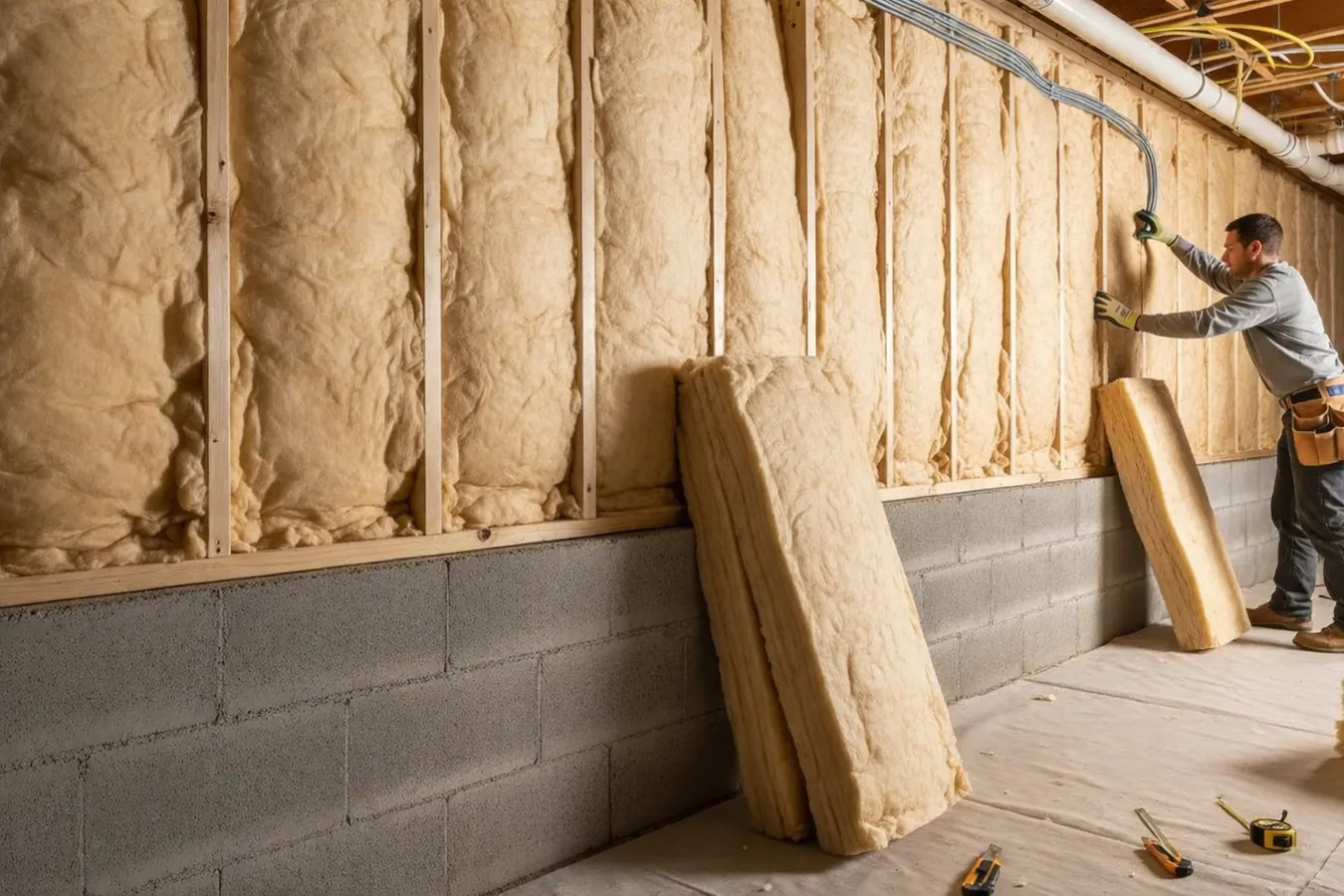
An uninsulated crawl space or basement lets summer heat and ground moisture push straight into your home. We seal and insulate the space below your floor so your house stays cooler, drier, and more comfortable.
Basement and crawl space insulation in Kerrville means slowing the movement of heat and moisture through the walls and floor of the space beneath your home, so your air conditioner does not have to fight against the ground year-round - most jobs are completed in one to two days for an average-sized crawl space, with larger spaces taking up to three days if moisture prep work is needed first.
Most Kerrville homes do not have a full basement in the traditional sense. The limestone bedrock that runs under the Edwards Plateau makes deep excavation difficult and expensive. What local homeowners typically have is a crawl space - a low enclosed area beneath the floor joists - and insulating that space is just as important as insulating the attic above. When the crawl space is uninsulated or the old material has failed, heat and humid air push up through the floor into your living area all summer long, and on cold winter nights, the pipes running through that space are vulnerable. Pairing crawl space insulation with our dedicated crawl space insulation service gives you a complete picture of what the work involves and what options are available.
The U.S. Department of Energy estimates that properly insulating and air-sealing a foundation space can reduce a home's total heating and cooling costs by 10 to 20 percent. In a place where summer cooling runs from April through October, that is a meaningful number on your monthly bill.
If the floors in your main living area feel noticeably warm or hot to the touch during Kerrville's long summers, heat is rising from an uninsulated crawl space below. This is especially common in older homes near downtown where the crawl space has no insulation and the ground radiates stored heat upward through the floor joists. The longer it goes unaddressed, the harder your air conditioner has to work every day.
A persistent earthy or musty odor - especially noticeable in the morning or after a heavy thunderstorm - often means ground moisture is moving up through an uninsulated, unprotected crawl space. In Kerrville, where summer storms can dump rain quickly, this is a common complaint in older homes with exposed dirt crawl spaces. That moisture is not just unpleasant - it creates conditions for mold and wood rot over time.
Kerrville does get hard freezes, and they tend to arrive fast. If you had a pipe freeze or burst during a recent cold snap, or if you ran faucets overnight to prevent one, that is a direct sign the space around your pipes lacks enough insulation and protection. An insulated and sealed crawl space keeps pipes above freezing even during the kind of brief but sharp cold events the Hill Country sees every winter.
If you have ever looked into your crawl space and spotted torn or sagging material hanging from the floor joists, gaps around pipes or ducts, or bare dirt with no covering, the insulation system has either failed or was never properly installed. These are visible signs that the space is not doing its job. Old fiberglass batts in particular tend to sag and fall over time, especially in humid environments, leaving large sections of floor unprotected.
Every project starts with an on-site assessment. We look at what is currently in the space, check for moisture or mold, measure the area, and identify air gaps around pipes, ducts, and the rim joist - the area where your floor meets the foundation wall. Air sealing those gaps comes before or alongside insulation, because gaps let conditioned air escape even through thick insulation. We primarily use spray foam for crawl space work in Kerrville because it seals and insulates in one step and holds up well against the moisture and temperature swings common in this area. For conditioned basements or finished spaces, rigid foam board is another strong option.
For homes where moisture has been an ongoing issue, we can pair insulation work with our crawl space insulation and closed-cell foam insulation services to address both the moisture pathway and the thermal layer in a single project. Closed-cell foam is particularly useful in crawl spaces because its built-in moisture resistance adds a second layer of protection against ground humidity.
Best for pier-and-beam homes with uninsulated floor joists - spray foam or batts are installed to stop heat and cold from moving through the floor.
Seals and insulates the framing where walls meet the foundation - one of the biggest sources of air leakage and heat loss in older Kerrville homes.
A heavy-duty ground cover that blocks moisture from rising out of the soil, often paired with insulation on the walls or joists for a complete system.
Applies closed-cell foam directly to crawl space walls and rim joist to seal air, block moisture, and insulate in a single application.
For homes with a finished or partially conditioned basement, insulates walls and ceiling to bring the space inside the home's thermal envelope.
Removes failed or fallen insulation before new material goes in - critical when old batts are sagging, moldy, or have collapsed away from the surface.
Kerrville averages more than 100 days per year above 90 degrees, and summer cooling costs are the dominant energy expense for most households in Kerr County. An uninsulated crawl space is essentially a direct connection between the scorching ground outside and the living space above - heat and humid air move up freely through the floor, and your air conditioner spends the whole summer fighting it. Kerrville's older housing stock compounds this. Many homes in neighborhoods near downtown and along the Guadalupe River were built in the 1940s through 1970s with little or no foundation insulation, and exposed dirt crawl spaces with no vapor barrier are still common in homes of that era. If yours is one of them, the ground beneath your feet is actively heating and humidifying your home every day from May through September. Homeowners in Ingram and Center Point often have similar crawl space situations, and we serve those areas as well.
Kerrville winters are mild but not toothless. Hard freezes happen several times each season, and the February 2021 winter storm was a stark reminder that pipes in uninsulated crawl spaces are genuinely at risk. Beyond the freeze risk, Texas does allow individual cities to adopt energy codes, and Kerrville follows the International Energy Conservation Code through Kerr County. That means insulation work on conditioned spaces is expected to meet minimum performance standards - and permitted work gets a third-party inspection. For homeowners, that inspection is a genuine benefit, not just paperwork.
When you reach out, we ask a few basic questions - the size of your home, whether you have a crawl space or basement, and whether you have noticed any moisture issues. We respond within one business day and schedule an on-site visit.
We visit your home, inspect the crawl space in person, and look for moisture, failed insulation, and air gaps. This takes 30 to 60 minutes. A written estimate with a clear scope of work follows within one to two business days - no obligation.
Clear stored items away from the crawl space access point and make sure the entry is easy to reach. If spray foam is being used, plan to keep children and pets away from the area for a few hours while the foam cures and any odor clears.
When the work is done, we walk you through what was installed, point out anything worth knowing, and leave the space clean. If a permit was required, the inspector confirms the work meets local standards and you receive a copy of the closeout.
Free estimate, no obligation. We respond within one business day.
(830) 488-9157Every job comes with a free written estimate before we start and written documentation of the materials and scope when we finish. You get that paperwork without having to ask - it is useful for your records, future contractors, or resale down the road.
A lot of contractors skip air sealing and go straight to laying insulation. We seal the gaps around pipes, ducts, and the rim joist first, because those gaps let conditioned air escape even through thick insulation. Sealing them is the step that moves the needle on your energy bill.
We check for moisture issues before any insulation is installed. Covering a wet crawl space traps moisture and creates conditions for mold and wood rot that cost far more to fix later. If we find a problem, we tell you plainly and will not install over it.
We work across Kerr County and the surrounding area, including homes built on limestone hillsides, pier-and-beam construction near the Guadalupe River corridor, and older ranch-style homes that need a different approach than new slab construction. Local knowledge matters in this work.
Choosing the right contractor for crawl space work matters more than it might seem - because most of the work happens out of sight, and the consequences of skipping steps do not show up until months later. We do it right the first time and show you what we did before we leave.
The most moisture-resistant insulation material available - ideal for crawl spaces where both thermal performance and vapor control matter.
Learn MoreDedicated crawl space insulation service covering floor joist insulation, encapsulation options, and the full range of materials suited to Hill Country conditions.
Learn MoreKerrville summers are long - get your crawl space insulated before the next cooling season starts and feel the difference on your first summer electric bill.